LinkedIn has become more than a place to upload a resume. It is now one of the most powerful platforms for personal branding, business visibility, and professional trust. If you want people to notice your expertise, you need more than a polished profile—you need content that feels useful, clear, and human.
That is where the right LinkedIn content tips make a difference. Strong content helps you attract the right audience, start meaningful conversations, and position yourself as someone worth following. Whether you are a founder, job seeker, consultant, or corporate professional, the way you write on LinkedIn can directly shape how people see you.
Why LinkedIn Content Matters
LinkedIn content is different from content on other social platforms. People are not logging in to be entertained for hours. They are looking for ideas, insights, lessons, and professional value.
This means your content should focus on helping, teaching, or sparking thoughtful discussion. The best posts do not try too hard to impress. They sound like a smart professional sharing real experience in a simple way.
When your content consistently adds value, people begin to trust your voice. That trust can lead to profile visits, connection requests, business opportunities, and career growth.
Know Your Audience First
Before writing anything, be clear about who you want to reach. A post written for recruiters will sound different from one written for clients, business owners, or industry peers.
Ask yourself a few basic questions:
- Who do I want reading this.
- What problems do they care about.
- What level of knowledge do they already have.
- What kind of language feels natural to them.
When you understand your audience, your writing becomes more focused. You stop posting random thoughts and start sharing content that matters to the people you want to influence.
Choose Content That Fits LinkedIn
One of the most practical LinkedIn content tips is to post content that matches the platform’s professional tone. That does not mean your writing has to be boring or stiff. It simply means your content should be relevant, thoughtful, and useful.
Good LinkedIn content usually falls into a few categories:
- Personal lessons from work or leadership.
- Industry insights or trends.
- Career advice and growth tips.
- Behind-the-scenes business experiences.
- Mistakes, wins, and reflections.
- Practical how-to posts.
A useful post does not need to be complex. Often, the simplest posts are the ones people save and share because they feel relatable and actionable.
Write Hooks That Stop the Scroll
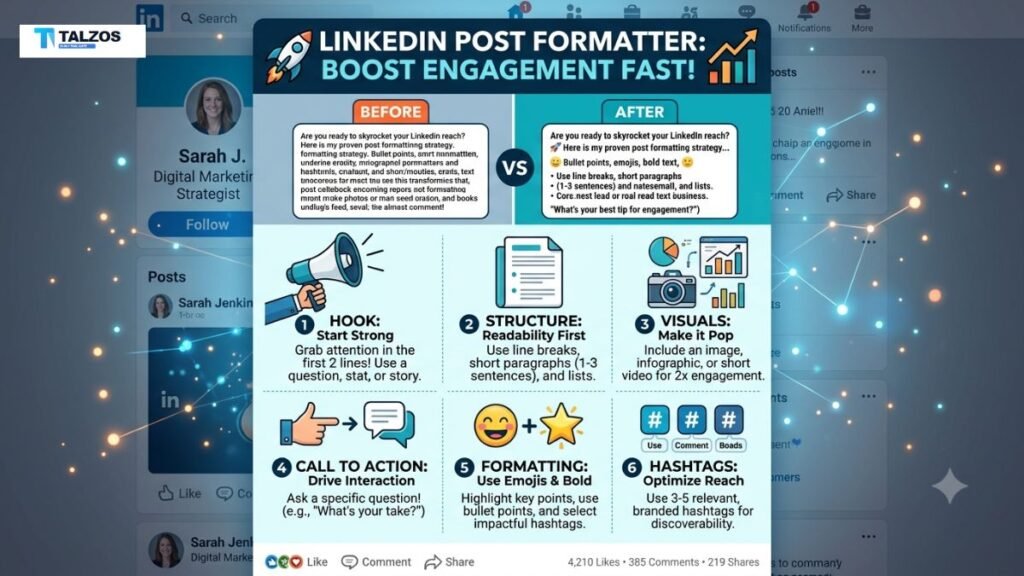
The first line of your post matters a lot. On LinkedIn, people decide quickly whether to keep reading. If your opening is weak, the rest of your post may never be seen.
A strong hook should create curiosity, promise value, or speak directly to a common pain point. For example:
- “Most professionals are posting on LinkedIn the wrong way.”
- “I grew my visibility on LinkedIn by changing one habit.”
- “If your LinkedIn posts are not getting engagement, read this.”
Your hook should not be clickbait. It should lead naturally into the rest of the post. Think of it as the doorway to your idea, not a trick to grab attention.
Keep Your Writing Clear and Simple
Professional content works best when it is easy to read. Long, complicated sentences can make your message feel heavy. Simple language usually performs better because it respects the reader’s time.
Here are a few ways to make your content easier to read:
- Use short paragraphs.
- Write in plain language.
- Avoid unnecessary jargon.
- Break ideas into small sections.
- Use examples when helpful.
Clear writing also makes you look more confident. You do not need fancy words to sound credible. In fact, clear writing often feels more expert because it shows that you understand your topic well enough to explain it simply.
Add Human Experience
One of the strongest LinkedIn content tips is to write like a person, not a brochure. People connect with stories, emotions, lessons, and real-life examples.
If you want your content to feel human, include details such as:
- What happened.
- What you learned.
- What surprised you.
- What changed your thinking.
- What advice you would give now.
For example, instead of saying, “Time management is important,” you could say, “I used to start every morning by checking email, and it constantly pulled me away from deep work. Changing that habit improved my focus within a week.”
That kind of writing feels real. It gives the reader something to relate to and something to remember.
Use a Strong Structure
Good LinkedIn posts are easy to follow. A simple structure makes your content more readable and more effective.
A reliable structure looks like this:
- Start with a strong hook.
- Share the main point.
- Add supporting insight, example, or lesson.
- End with a takeaway or question.
This format works because it gives the reader a clear path. It also helps you stay focused while writing. If your post starts drifting, bring it back to the main message.
For longer posts, consider using subheadings or line breaks to guide the reader. Even on LinkedIn, structure creates better engagement because it makes the content feel lighter and more approachable.
Focus on Value, Not Volume
Many professionals think they need to post constantly to grow on LinkedIn. In reality, consistency matters, but value matters more. A few strong posts are better than many empty ones.
Ask yourself before posting:
- Does this help my audience.
- Does this teach something useful.
- Does this share a useful perspective.
- Will someone feel glad they read it.
If the answer is yes, you are on the right track. If the post exists only to fill space, it may not perform well. People follow voices that make them think, solve problems, or see something differently.
Use Keywords Naturally
SEO matters on LinkedIn too. If you want your content to appear in search and attract the right readers, use keywords naturally in your profile and posts. Since this article focuses on LinkedIn content tips, that phrase should appear in a way that feels natural, not forced.
Use keywords in places such as:
- The first paragraph.
- Headings.
- Profile headline and about section.
- Descriptions of your expertise.
- Post text where relevant.
Do not stuff keywords into every sentence. Search-friendly writing should still read smoothly. The goal is visibility without losing the human tone that makes LinkedIn effective.
Encourage Engagement the Right Way
Engagement on LinkedIn does not happen by accident. If you want people to comment, react, or share, give them a reason to respond.
You can encourage engagement by:
- Ending with a thoughtful question.
- Asking readers to share their experience.
- Inviting opinions on a topic.
- Keeping the post relevant to current challenges.
For example, you might ask, “What is one LinkedIn habit that improved your visibility?” That kind of question invites real responses instead of low-effort comments.
The best engagement comes from genuine curiosity. Do not ask questions just for the sake of boosting interaction. Ask something that people actually want to answer.
Make Your Tone Professional but Warm
Your tone should feel credible, but not cold. On LinkedIn, the best writing often sounds like a smart colleague speaking with clarity and respect. It is professional, but it still has personality.
To keep your tone balanced:
- Be confident without sounding arrogant.
- Be helpful without sounding preachy.
- Be conversational without becoming casual.
- Be direct without sounding harsh.
This balance matters because people respond to voices they trust. A warm, grounded tone helps your content feel approachable while still showing expertise.
Use Storytelling to Build Trust
Stories are powerful because they make abstract ideas easier to understand. If you want your content to feel memorable, use short stories to support your message.
A strong story does not have to be dramatic. It can be as simple as:
- A lesson from a meeting.
- A mistake that taught you something.
- A client challenge you solved.
- A moment that changed your perspective.
Stories work well because they turn advice into experience. Instead of telling people what to do, you show them why it matters. That creates a deeper connection and makes your content more believable.
Edit Before Posting
Even strong ideas can lose impact if the writing is messy. Editing is an essential part of content writing, especially on LinkedIn where professionalism matters.
Before you post, check for:
- Grammar and spelling errors.
- Repetitive phrases.
- Long or confusing sentences.
- Weak openings or endings.
- Words that do not add value.
Reading your post out loud can help you spot awkward phrasing. If something sounds unnatural when spoken, it will probably feel unnatural when read too. Clean writing is a small detail that makes a big difference.
Stay Consistent Over Time
LinkedIn growth usually happens through repetition, not one viral post. If you want people to remember you, you need to show up regularly with useful content.
You do not need to post every day. What matters is building a realistic rhythm you can maintain. That might mean posting two or three times a week, sharing a weekly insight, or writing one detailed post every few days.
Consistency builds recognition. Over time, your audience starts to associate your name with a certain kind of value. That is how a professional brand becomes stronger.
Final Thoughts
Writing great LinkedIn content is not about sounding overly polished or forcing attention. It is about sharing useful ideas in a way that feels clear, honest, and human. If you apply the right LinkedIn content tips, you can build trust, strengthen your professional brand, and attract the right opportunities.
Focus on your audience, write with clarity, use real examples, and keep your tone natural. The more helpful and authentic your content feels, the more effective it will be.