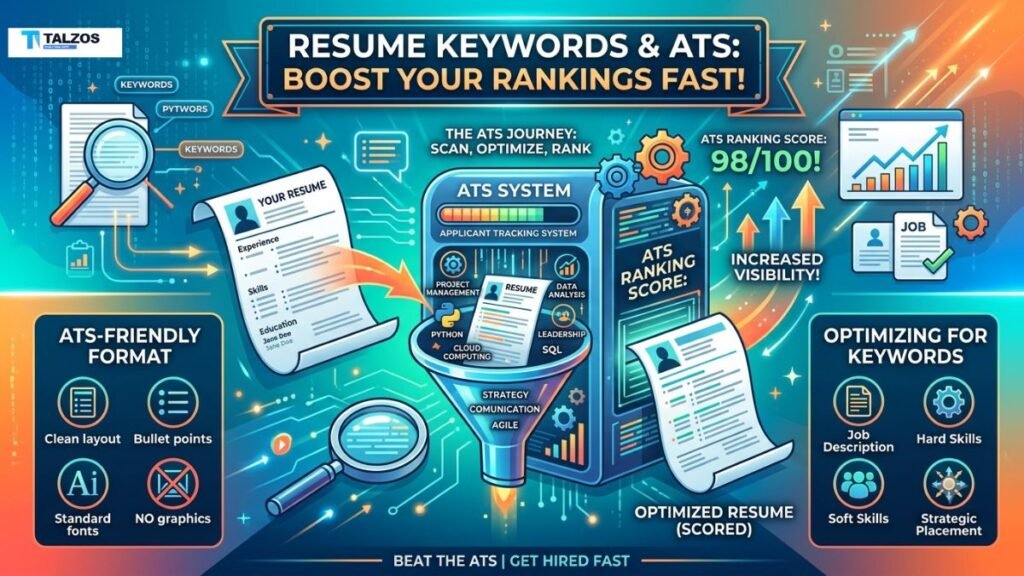
When you apply for a job online, your resume often has to pass through an Applicant Tracking System, or ATS, before a recruiter ever sees it. That means your carefully written experience can be overlooked if your resume does not contain the right resume keywords ATS software is searching for.
Understanding how ATS works is one of the smartest ways to improve your chances of landing interviews. The good news is that you do not need to trick the system or stuff your resume with awkward phrases. You just need to learn how to match your skills, experience, and language to the job description in a natural, human way.
What Is an ATS
An Applicant Tracking System is software employers use to collect, scan, sort, and rank job applications. It helps hiring teams manage large volumes of resumes quickly, especially for roles that attract many applicants.
ATS software looks for specific details such as job titles, skills, certifications, tools, and industry language. If your resume does not include enough of the right terms, it may receive a lower match score and never reach a recruiter’s desk.
Why Resume Keywords Matter
Resume keywords are the words and phrases that connect your background to a specific job. These often come directly from the job posting and may include technical skills, soft skills, certifications, software, or role-specific responsibilities.
When ATS scans your resume, it compares your content to the job description. The more relevant keywords it finds in the right context, the more likely your resume is to rank higher. That does not guarantee an interview, but it does improve your visibility.
How ATS Uses Keywords
ATS systems are designed to identify whether a candidate appears qualified for a role. They do this by searching for exact or near-exact matches to the terms in the posting.
For example, if a job description repeatedly mentions project management, stakeholder communication, budget tracking, and Agile methodology, the ATS may look for those same phrases in your resume. If you only write “managed projects” or “worked with teams,” you might miss some of the stronger matches the system expects.
That is why using the right resume keywords ATS tools recognize is so important. The system is not reading for style or personality first. It is scanning for alignment.
Where to Find the Right Keywords
The best keywords usually come from the job description itself. Start by reading the posting carefully and identifying repeated terms, required skills, preferred qualifications, and key responsibilities.
Look for:
- Hard skills such as Excel, Python, Salesforce, or budgeting.
- Soft skills such as communication, leadership, or collaboration.
- Job titles and role-specific language.
- Certifications, licenses, and education requirements.
- Industry terms and acronyms used in the posting.
You can also review similar job ads from the same company or industry. This helps you spot the language employers consistently use.
How to Add Keywords Naturally
The key is to place keywords in a way that sounds natural and believable. Avoid repeating the same phrase over and over just to force a match.
Instead, weave keywords into:
- Your professional summary.
- Your skills section.
- Your work experience bullets.
- Your achievements and results.
- Your certifications or education section.
For example, instead of writing, “Responsible for project management,” you could write, “Led cross-functional project management efforts to deliver product updates on schedule and under budget.” This sounds more human while still using relevant terms.
Humanizing Your Resume Keywords
Many job seekers worry that keyword optimization will make their resume sound robotic. That happens only when keywords are added without context.
A humanized resume balances ATS optimization with real storytelling. It should still sound like you, not like a list of buzzwords copied from a job post.
Try this approach:
- Use action verbs.
- Show results with numbers when possible.
- Include the keyword in a complete sentence.
- Keep each bullet focused on a real accomplishment.
For instance, “Improved customer service” is weak. “Improved customer service response time by 30% by introducing a new ticketing workflow” is stronger for both ATS and hiring managers.
Common Keyword Mistakes to Avoid
A lot of resumes fail not because the candidate lacks experience, but because the keywords are used poorly. Small mistakes can reduce your match score or make your resume harder to read.
Avoid these common issues:
- Keyword stuffing, which makes the resume feel unnatural.
- Using only abbreviations when the full term is also needed.
- Copying keywords without showing actual experience.
- Using outdated job titles or vague language.
- Hiding important terms inside graphics, tables, or images that ATS may not read properly.
If you want your resume keywords ATS systems identify easily, keep formatting simple and content clear.
Best Sections for ATS Keywords
Some parts of a resume matter more than others when it comes to keyword recognition. ATS systems usually scan all text, but certain sections carry more weight.
Professional Summary
This is one of the first places to include your most important keywords. A short summary can quickly show that your background matches the role.
Skills Section
This section is ideal for technical skills, tools, certifications, and role-specific abilities. Keep it aligned with the job description and avoid listing skills you cannot actually use.
Work Experience
This is where keywords become more powerful because they are backed by real accomplishments. Use specific actions, results, and context.
Education and Certifications
If the job requires a degree, license, or certification, include the exact wording. ATS often searches for these terms as required qualifications.
Example of Keyword Optimization
Here is a simple example.
Weak version:
“Responsible for team projects and reporting.”
Stronger version:
“Managed cross-functional team projects, created monthly performance reports, and used Excel to track KPIs and improve reporting accuracy.”
The second version includes more relevant keywords such as cross-functional, projects, reporting, Excel, KPIs, and accuracy. It also gives real context, which helps both ATS and human reviewers.
How to Balance ATS and Readability
A resume should be optimized for software, but written for people. That balance is what makes it effective.
If your resume is too focused on keywords, it can sound stiff and repetitive. If it is too focused on storytelling, ATS may not recognize your qualifications. The best resumes do both.
Use the exact phrases where they fit naturally, but also make sure your sentences still sound polished and clear. Think of keywords as signals, not filler.
Tailoring Your Resume for Each Job
One of the biggest mistakes candidates make is sending the same resume to every employer. ATS systems reward relevance, so tailoring your resume can make a big difference.
Before applying, compare your resume to the job description and adjust:
- The summary to reflect the role.
- The skills section to match the posting.
- The bullet points to emphasize the most relevant experience.
- The wording to align with the company’s language.
Even small changes can improve how your resume performs. You do not need to rewrite everything, but you should customize the most important sections for each application.
Extra Tips to Improve ATS Ranking
Keyword placement matters, but it is not the only thing ATS systems consider. Clean formatting and accurate information also help.
Use these tips:
- Stick to standard section headings like Experience, Skills, and Education.
- Use a simple font and avoid text boxes or complicated layouts.
- Include both acronyms and full phrases when relevant, such as “Search Engine Optimization (SEO).”
- Mirror the job description’s wording when it accurately reflects your background.
- Keep your resume in a format the employer requests, usually PDF or DOCX.
These steps help make sure your content can actually be read and matched properly.
Final Thoughts
Resume keywords are not about gaming the system. They are about helping employers see that your experience fits what they need. When you use the right resume keywords ATS platforms recognize, you improve your chances of getting past the first filter and into the hands of a recruiter.
The best approach is simple: read the job description carefully, identify the most important terms, and use them naturally throughout your resume. When your resume is both ATS-friendly and human-friendly, you give yourself a much stronger chance of moving forward in the hiring process.